
Comet Assay IV: A point-and-click scoring innovation Telephone International: +44 1440 730773
Telephone N. America: +1 (610) 941 0990
Online: Contact us now!
Français | Español | Deutsch
Home | About the comet assay | Comet Assay IV cell scoring software | Contacting us | About us | Clients
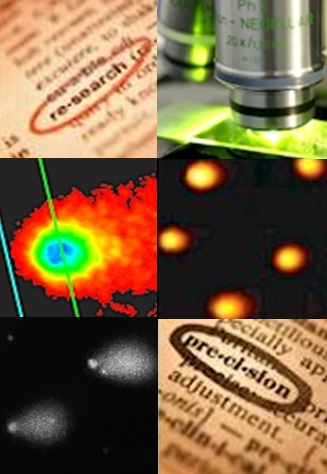
Introduction to the comet assay

Image of some comets

The comet assay, or Single-Cell Gel Electrophoresis (SCGE) Technique, was developed in the late 1980's by Swedish researchers Ostling & Johanson as a fast, effective way of measuring DNA damage in individual cells.

The Comet assay is used for a wide range of applications, including DNA damage and repair studies, genetic toxicology testing, biomonitoring and nutritional research. Perceptive Instruments are leading experts in image analysis for the comet assay. We regularly attend comet assay workshops and contribute to the debate towards regulatory acceptance of the assay.

Starting the comet assay

If you are looking to start up the comet assay within your laboratory, then why not view our brief guide on equipment you need to perform the comet assay. This page gives an introduction based on using pre-prepared commercial comet assay kits. If you intend to work with glass slides and prepare your own agarose, as many prefer to do, then our hints and tips page and microscopy tips page will be useful as well.

Andrew Collins and his team at the University of Olso have produced a comet assay training DVD as part of the European Commission NewGeneris project FOOD-CT-2005-016320. NewGeneris is an Integrated Project conducted within the European Union's 6th Framework Programme, priority area Food Quality and Safety. Its objective is to investigate the role of prenatal and early-life exposure to genotoxic chemicals present in food and the environment in the development of childhood cancer and immune disorders.

For more information on the comet assay training DVD and on how to obtain it, please visit the News and events section of the NewGeneris website.

Useful hints and tips

If you're experiencing fading with your cells, having trouble getting your agarose to bond with your slides or just wondering which stains are best, then visit our hints and tips page. We also have a page dedicated to microscopy tips for comet assay.

Case studies

We also have a number of interesting case studies that demonstrate some of the real-world applications in which Perceptive Instruments comet assay systems are being used.

Recent papers: 2007

Comet Assay scoring software is used extensively in laboratories throughout the world and by leading academics in the field. We are currently compiling a list of published articles in which our Comet Assay II, III and IV systems have been utilised.

The list below shows a selection of papers from 2007. For further lists, please see our list of papers from 2006 and our list of papers from 2005.

Essential Roles for Fe65, Alzheimer Amyloid Precursor-binding Protein, in the Cellular Response to DNA Damage
(2007) G. Minopoli et al, J. Biol. Chem. 282(2):831-835

DNA damage in multiple organs after exposure to chlorhexidine in Wistar rats
(2007) T. Grassi et al, Int. J. Hygiene & Env. Health 210(2):163-167

The quercetin paradox
(2007) A.W. Boots et al, Tox & Appl. Pharma. 222(1):89-96

Genotoxic effects induced by formaldehyde in human blood and implications for the interpretation of biomonitoring studies
(2007) O. Schmid and G. Speit, Mutagenesis 22(1):69-74

Use of sensitive methods for detection of DNA damage on human lymphocytes exposed to p,p'-DDT: Comet assay and new criteria for scoring micronucleus test
(2007) G. Gajski et al, J. Env. Sci & Health Pt.B 42(6):607-613

Chicken nucleated blood cells as a cellular model for genotoxicity testing using the comet assay
(2007) M. Sokolovic et al, Food & Chem. Tox. 45(11):2165-2170

Influence of endogenous and synthetic female sex hormones on human blood cells in vitro studied with comet assay
(2007) M. Gobbo Braz and D. M. Fávero Salvadori, Tox. in Vitro 21(5):972-976

DNA-damaging ability of isoprene and isoprene mono-epoxide (EPOX I) in human cells evaluated with the comet assay
(2007) R. Fabiani et al, Mut. Res. 629(1):7-13

Genetic damage in human peripheral lymphocytes exposed to antimicrobial endodontic agents
(2007) G. N. Da Silva et al, Oral Surg. 104(2):e58-e61

Genotoxic effects of exposure to radiofrequency electromagnetic fields (RF-EMF) in cultured mammalian cells are not independently reproducible
(2007) G. Speit et al, Mut. Res. 622(1-2):42-47

Biocompatibility of gutta-percha solvents using in vitro mammalian test-system
(2007) D. Ribeiro et al, Oral Surg. 103(5):e106-e109

Absence of DNA damage in multiple organs (blood, liver, kidney, thyroid gland and urinary bladder) after acute fluoride exposure in rats
(2007) A. de Lima Leite et al, Human & Expt. Tox. 26(5):435-440

Genotoxic effects in the Eastern mudminnow (Umbra pygmaea L.) after exposure to Rhine water, as assessed by use of the SCE and Comet assays: A comparison between 1978 and 2005
(2007) G. M. Alink et al, Mut. Res. 631(2):93-100

Evaluation of level of DNA damage in blood leukocytes of non-diabetic and diabetic rat exposed to cigarette smoke
(2007) P. H. Ortiz Lima et al, Mut. Res. 628(2):117-122

GSTM1 and GSTT1 polymorphism influences protection against induced oxidative DNA damage by quercetin and ascorbic acid in human lymphocytes in vitro
(2007) L. C. Wilms et al, Food & Chem. Tox. 45(12):2592-2596

Lycopene activity against chemically induced DNA damage in Chinese hamster ovary cells
(2007) C. Scolastici et al, Tox. in Vitro 21(5):840-845

DNA damage and nitric oxide synthesis in experimentally infected Balb/c mice with Trypanosoma cruzi
(2007) D. Ribeiro et al, Expt. Parasitology. 116(3):296-301

Differential response related to genotoxicity between eggplant (Solanum melanogena) skin aqueous extract and its main purified anthocyanin (delphinidin) in vivo
(2007) L. Azevedo et al, Food & Chem. Tox. 45(5):852-858

Fumonisin B1: Oxidative status and DNA damage in rats
(2007) A. Domijan et al, Toxicology 232(3):163-169

Characterization of the genotoxic potential of formaldehyde in V79 cells
(2007) G. Speit et al, Mutagenesis 22(6):387-394

8-Oxoguanine DNA Glycosylase and MutY Homolog Are Involved in the Incision of Arsenite-Induced DNA Adducts
(2007) Y. Pu et al, Tox. Sci. 95(2):376-382

In vitro cytotoxicity and genotoxicity of chlorinated drinking waters sampled along the distribution system of two municipal networks
(2007) L. Marabini et al, Mut. Res. 634(1-2):1-13

Comparative evaluation of acetylcholinesterase status and genome damage in blood cells of industrial workers exposed to carbofuran
(2007) D. Zeljezic et al, Food and Chem. Tox. 45(12):2488-2498

Primary DNA damage and genetic polymorphisms for CYP1A1, EPHX and GSTM1 in workers at a graphite electrode manufacturing plant
(2007) M. Moretti et al, BMC Pub. Health 7:270

Impact of multiple genetic polymorphisms on effects of a 4-week blueberry juice intervention on ex vivo induced lymphocytic DNA damage in human volunteers
(2007) L. C. Wilms et al, Carcinogenesis 28(8):1800-1806

An optimized method for detecting gamma-H2AX in blood cells reveals a significant interindividual variation in the gamma-H2AX response among humans
(2007) I. H. Ismail et al, Nuc. Acids Res. 35(5):e36

TDP1 facilitates repair of ionizing radiation-induced DNA single-strand breaks
(2007) S. F. El-Khamisy et al, DNA Repair 6(10):1485-1495

Irinotecan Toxicity to Human Blood Cells in vitro: Relationship between Various Biomarkers
(2007) N. Kopjar et al, Bas. Clin. Pharma. & Tox. 100(6):403-413

Inhibition of the mitochondrial respiratory chain function abrogates quartz induced DNA damage in lung epithelial cells
(2007) H. Li et al, Mut. Res. 617(1-2):46-57

Poly(ADP-Ribose) Polymerase 1 Accelerates Single-Strand Break Repair in Concert with Poly(ADP-Ribose) Glycohydrolase
(2007) A. E. O. Fisher et al, Mol. Cell. Biol. 27(11):5597-5605

Blood mononucleocytes are sensitive to the DNA damaging effects of iron overload—In vitro and ex vivo results with human and rat cells
(2007) E. Park et al, Mut. Res. 619(1-2):59-67

Dietary synbiotics reduce cancer risk factors in polypectomized and colon cancer patients
(2007) J. Rafter et al, Amer. J. Clin. Nutr. 85(2):488-496

The effect of nano- and micron-sized particles of cobalt–chromium alloy on human fibroblasts in vitro
(2007) I. Papageorgiou et al, Biomaterials 28(19):2946-2958

Fecal Water as a Non-Invasive Biomarker in Nutritional Intervention: Comparison of Preparation Methods and Refinement of Different Endpoints
(2007) A. Klinder et al, Nut. & Cancer 57(2):158-167

Toxicological potential of 2-alkylcyclobutanones – specific radiolytic products in irradiated fat-containing food – in bacteria and human cell lines
(2007) A. Hartwig et al, Food & Chem. Tox. 45(12):2581-2591

Human gastric cells resistant to (-)-epigallocatechin gallate show cross-resistance to several environmental pollutants
(2007) S.B. Horng et al, Food & Chem. Tox. 45(11):2171-2178

Genotoxic effects of particles of surgical cobalt chrome alloy on human cells of different age in vitro
(2007) I. Papageorgiou et al, Mut. Res. 619(1-2):45-58

TDP1 facilitates chromosomal single-strand break repair in neurons and is neuroprotective in vivo
(2007) S. Katyal et al, EMBO J. 26:4720-4731

DNA damage, acetylcholinesterase activity and lysosomal stability in native and transplanted mussels (Mytilus edulis) in areas close to coastal chemical dumping sites in Denmark
(2007) J. Rank et al, Aqua. Tox. 84(1):50-61

The environmental carcinogen 3-nitrobenzanthrone and its main metabolite 3-aminobenzanthrone enhance formation of reactive oxygen intermediates in human A549 lung epithelial cells
(2007) T. Hansen et al, Tox. & App. Pharma. 221(2):222-234

Genotoxicity of Corrosion Eluates Obtained From Endosseous Implants
(2007) D. Ribeiro et al, Implant Dent. 16(1):101-109

For even more papers using our systems, please see our list of papers from 2006 and from 2005.